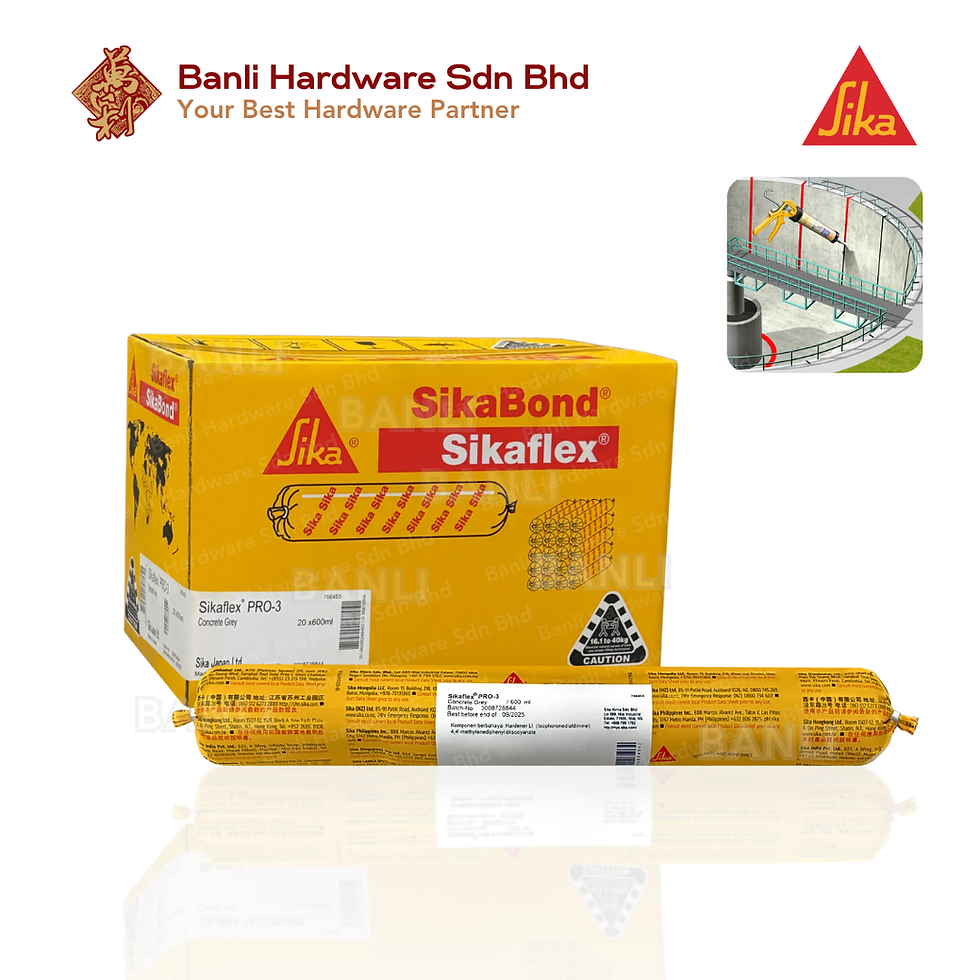
SikaWall® 603 Acrylic | Ready-to-use Acrylic Skim Coat (5kg & 25kg)
Brand : Sika
Product Type : Ready-to-use Acrylic Skim Coat
Size : 5kg and 25kg
Colour : White
Composition : Synthetic resin, mineral filler and admixture
Maximum Grain Size : 0.1mm
Product Description:
SikaWall®-603 Acrylic is a skim smoothing rendering paste that is used for levelling uneven surfaces and repairing surface defects in concrete, plasters and drywalls. A smooth surface is obtained by eliminating blemishes such as grooves, seams, fine cracks and blowholes.
Usage:
For interior and exterior walls, columns and ceilings:
- Shuttered concrete
- Reinforced concrete shell-work
- Concrete soffits
- Cast insitu concrete
- Precast concrete panels/Acotec panels
Note: Painting on skimcoat surface is recommended for exterior application. For interior use:
- Light weight block plasters
- Brickwall plasters
- Drywalls - Gypsum boards, cement boards and plaster boards
Features / Advantages:
- Application thickness of 0.3–4.0 mm
- White smooth finish
- Excellent trowelability
- Can be overpainted
- Good weather resistance
- Cost and time saving
Shelf Life:
12 months from date of production
Storage Conditions:
Store properly in original, unopened and undamaged sealed packaging in dry conditions at temperatures between +20 °C and +30 °C. Protect from direct sunlight, rain and water.
Application Guide:
Tensile Adhesion Strength : ~1.5 N/mm² at 28 days
Fresh Mortar Density : 1.8 kg/L
Curing Time : 24–48 hours depending on application thickness and ambient conditions.
Waiting Time / Overcoating : 2 hours at 20 °
Consumption : ~1.8 kg/m² per mm thick, depending on the quality of the substrate
Application Steps:
Note:
SikaWall®-603 Acrylic is a ready-to-use skim coat. Do not mix with any other materials, including water.
Step 1 :
Apply a layer of SikaWall-603 Acrylic to the surface of the substrate with a clean stainless steel trowel.
Always work to achieve a flat and smooth surface with minimal trowel marks.
Step 2 :
Maintain a wet edge by applying and leveling continually over the substrate surface.
Step 3 :
Work the skim coat to corners, joints or other natural breaks.
Step 4 :
Allow surface to completely cure before applying subsequent coats.
Step 5 :
Wash the blade of tool regularly in order to remove hardened residues.
Never return the product to the bucket.
Two separate coats must be applied for successful resurfacing. (First layer as a primer to fill up all minor defects).
If required, sand the surface of first coat using #80–#100 drywall sand paper and remove all dust by compressed air or vacuum.