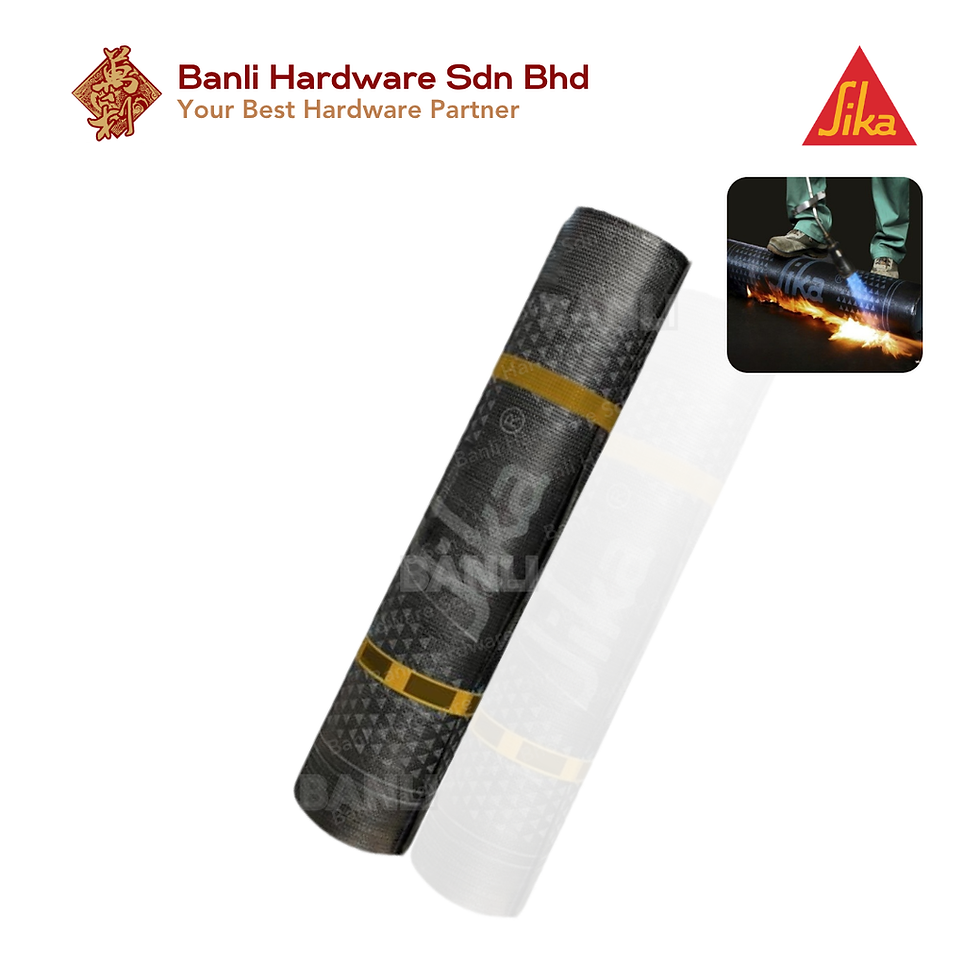
Sika Waterbar®
Brand : Sika
Product Type : Flexible PVC waterbar
Packaging : 20 metres roll (other lengths on request)
Colour : Flexible strip / yellow
Composition : Polyvinyl chloride
Product Description:
Sika Waterbar is constructed from flexible thermoplastic PVC. It is designed to stop the migration of water through construction joints in concrete structures.
Application Area:
For the effective sealing of concrete construction joints in structures such as:
- Water reservoirs
- Sewage treatment plants
- Swimming pools
- Basements
- Retaining walls
- Lift shafts
- Tunnels, culverts
- Service pits
Features / Advantages:
- Sealing starts as soon as the concrete has hardened
- Multi rib profile provides impenetrable barriers to water migration
- Can be easily site welded - (welding knife is available)
- Good chemical resistance
- Available various kind of profiles for all of type application
Storage:
Dry, shaded place (protected from sunlight)
Shelf Life:
5 years from date of production if stored properly
Storage:
Dry, shaded place (protected from sunlight)
Application Guide:
Fixing to formwork:
The “V” profile Sika Waterbar® is fitted into the split formwork or shuttering for casting centrally into the stopends. It is used for construction joints and movement joints where nominal movement is anticipated, such as basement or retaining walls.
Fixing to reinforcement:
Pre-punched eyelets are located in the outer flanges of the profiles. These simplify the fixing of waterbars to the steel reinforcement with tie wires to ensure the waterbars are not displaced during concreting.
Placing concrete first stage:
The Sika Waterbar® performs its function only if both sides are well embedded in the concrete. Avoid formation of honey combs by vibrating carefully.
The consistency of the concrete itself should be neither too plastic nor too stiff, and the aggregate must be well graded.
Placing of fresh concrete near the Sika Waterbar® V VN requires care, as otherwise it will be forced from its position by the pressure of the fresh concrete, i.e. the ends will fold up. To prevent this, the same concrete pressure must be present on both sides of the Waterbar.
Placing concrete second stage:
Removal of formwork in the neighborhood of Sika Waterbar® must be done with care.The end of the Sika Waterbar® should be thoroughly checked for honeycombing on the stop-end and repaired if necessary. It must also be cleaned of all hardened concrete remnants adhering from the first concrete stage. Further procedure is similar to the first stage.
Welding:
On site welding can be undertaken using an electric welding knife. Both ends of the joint are heated simultaneously on the faces of the welding knife until an even, molten bead of PVC appears.
The welding knife is withdrawn and the Sika Waterbar® are immediately pushed together. The joint should be held rigid until the plastic cools down and solidifies. Check for any gaps or imperfect joints. Redo the welding if necessary. Failures can be caused by irregularities of cut edges, insufficient heat, dust etc.